Rhinoplasty in Atlanta with Dr. Golde
Functional & Cosmetic Rhinoplasty Focused on Natural Form and Comfortable Breathing
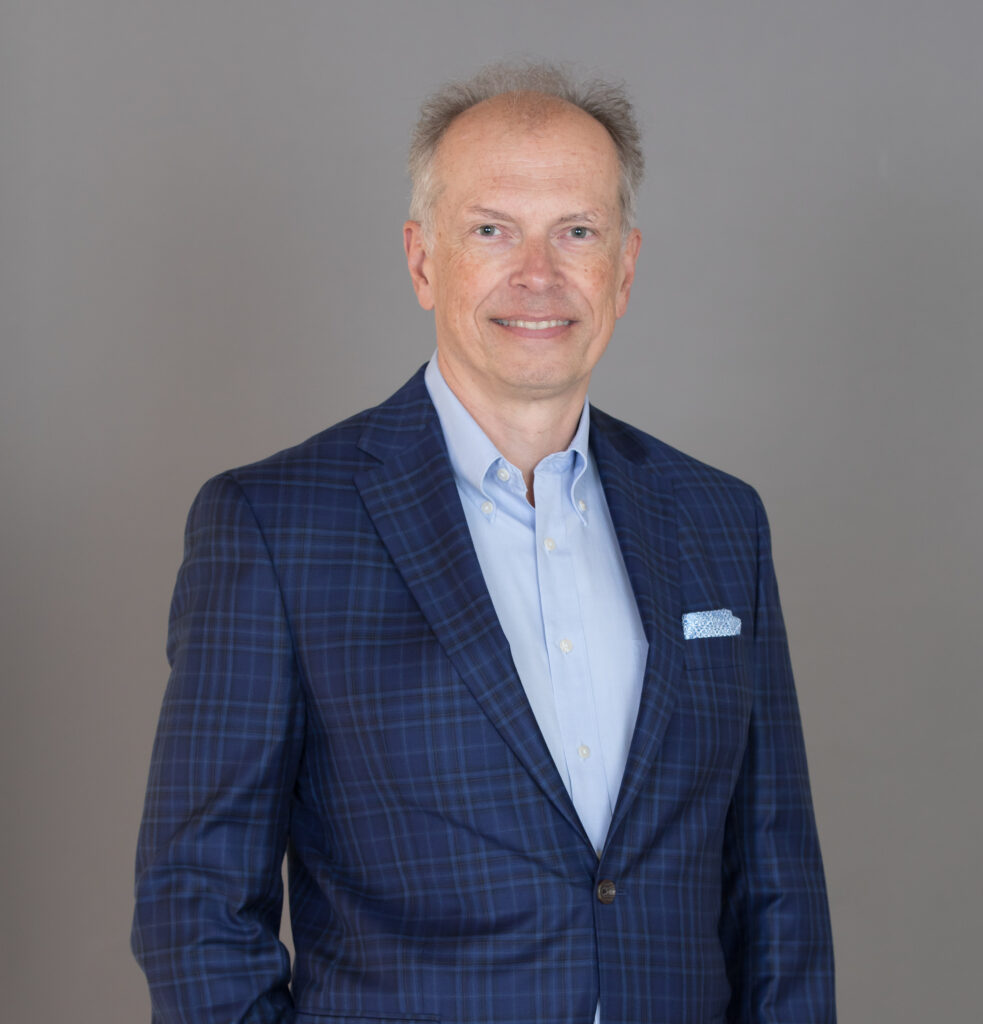
The nose is both a defining facial feature and an important part of the airway. For that reason, Dr. Golde approaches rhinoplasty by considering appearance, structure, and breathing together.
For more than 30 years, Dr. Golde has performed nasal surgery in Atlanta, with experience that includes more than 4,000 nasal procedures. As a board-certified otolaryngologist and head and neck surgeon, his approach to rhinoplasty begins with a detailed understanding of nasal anatomy and function.
The goal is not to create a nose that looks “operated on.” The goal is a nose that looks balanced and natural for the individual while maintaining the structural support needed for comfortable breathing.
Natural appearance. Thoughtful structure. Comfortable breathing.
Rhinoplasty Guided by Function
Cosmetic changes to the nose can affect more than appearance. The bones and cartilage that determine the shape of the nose also contribute to the nasal airway.
Dr. Golde therefore evaluates the effect of each proposed change on airflow, nasal support, and long-term function. A cosmetic improvement should not come at the expense of breathing.
This is particularly important because successful rhinoplasty often involves a careful balance. Removing or repositioning too much cartilage can weaken nasal support. Making the nose smaller does not necessarily make it better. In some patients, maintaining or rebuilding structural support is an important part of achieving both a natural appearance and a stable airway.
Experience Matters in Rhinoplasty
No two noses are exactly alike. Neither are two nasal airways.
Dr. Golde is a board-certified otolaryngologist who has practiced in Atlanta for more than three decades. His experience includes functional nasal surgery, cosmetic rhinoplasty, septal surgery, nasal valve surgery, sinus surgery, and treatment of complex nasal obstruction.
Rhinoplasty requires more than changing the external shape of the nose. It requires understanding how the nasal bones, septum, upper and lower nasal cartilages, turbinates, nasal valves, skin, and soft tissues work together.
Experience also helps guide restraint—knowing which changes are likely to improve facial balance and which may unnecessarily weaken the nose or alter its character.
A Natural Approach to Cosmetic Rhinoplasty
Cosmetic rhinoplasty may address concerns involving the nasal bridge, width, symmetry, profile, projection, nostrils, or nasal tip.
Dr. Golde’s approach is individualized rather than based on a standard or fashionable nasal shape. Facial proportions, skin thickness, cartilage strength, nasal function, and the patient’s goals are considered when developing a surgical plan.
The objective is facial balance rather than perfection.
Ideally, the nose should complement the eyes, lips, chin, and overall facial structure without drawing attention to the fact that surgery was performed.
A natural-looking rhinoplasty also preserves the characteristics that make each patient’s face individual. The goal is not to give every patient the same nose, but to make thoughtful changes that fit the person.
Understanding the Nasal Airway
Comfortable nasal breathing depends on several structures working together. A breathing problem may result from one area of narrowing or from several problems occurring at the same time.
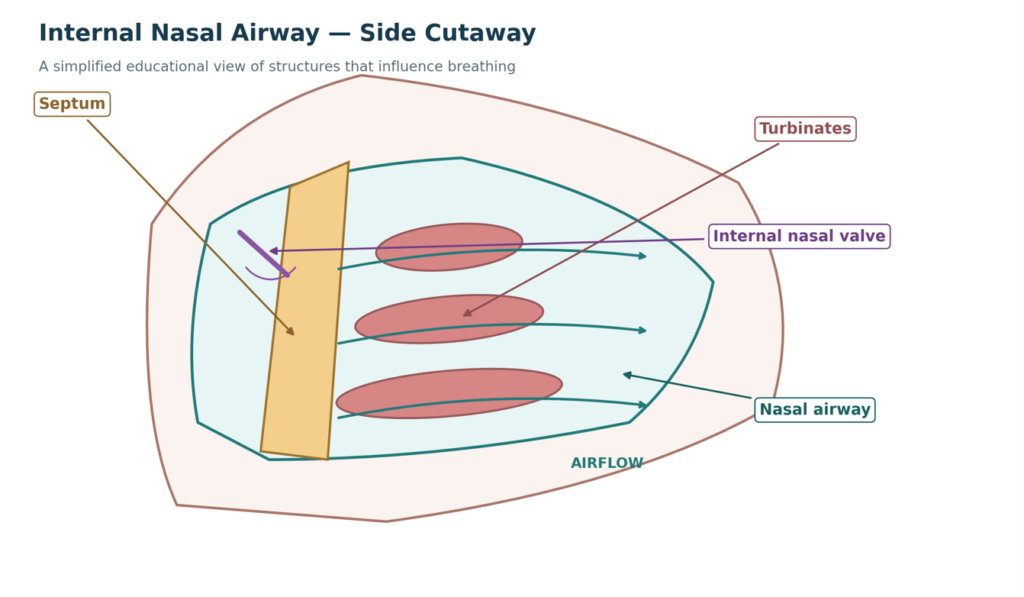
The nasal septum is the central wall of cartilage and bone that separates the two nasal passages. A deviated or damaged septum can narrow one or both sides of the nose.
The turbinates are tissue-covered structures along the side walls of the nasal cavity. They help warm, humidify, and filter inhaled air. When enlarged, they may contribute to chronic congestion or nasal obstruction.
The nasal valves are among the narrowest areas of the nasal airway. Both the internal and external nasal valve regions need adequate support to remain open during breathing.
For patients considering rhinoplasty in Atlanta, Dr. Golde evaluates these internal structures along with the external appearance of the nose. This helps identify breathing problems that may need to be addressed as part of the surgical plan.
The Nose Is a Structural Framework
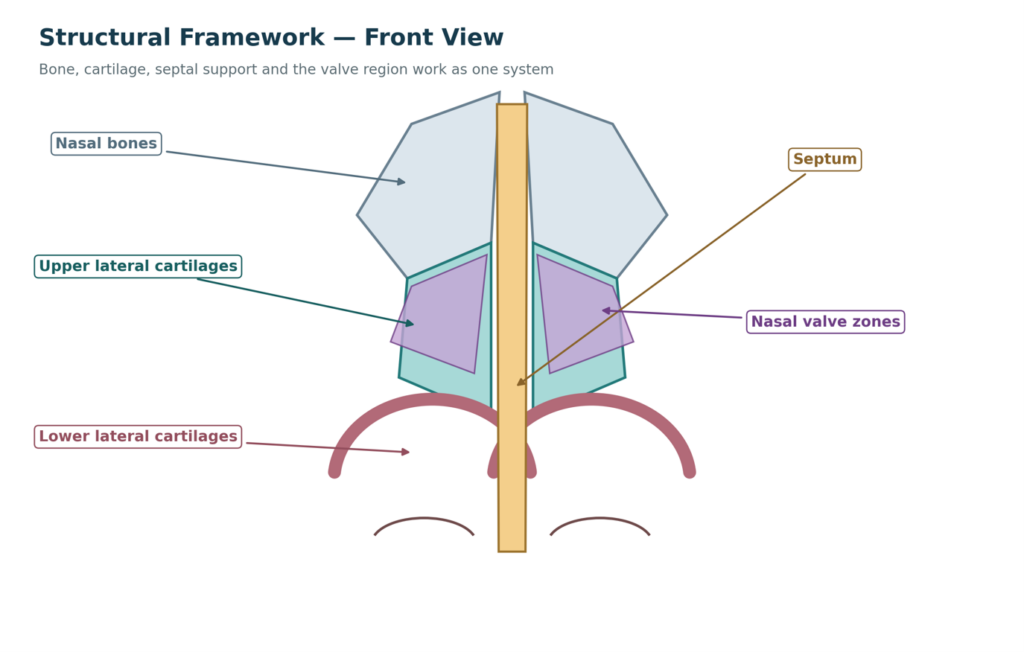
The visible shape of the nose is created by a connected framework of bone and cartilage covered by skin and soft tissue. These same structures help support the airway.
The nasal bones form the upper bridge of the nose. Changes in their width or alignment may affect both appearance and the bony nasal passage.
The upper lateral cartilages form much of the middle portion of the nose and contribute to the internal nasal valve. Maintaining appropriate support in this region is important for stable nasal breathing.
The lower lateral cartilages help form and support the nasal tip and nostril margins. Excessive removal or inadequate support can create an unnatural appearance and may weaken the external nasal valve.
For this reason, rhinoplasty is not simply a matter of making parts of the nose smaller. Good structural planning is essential.
Functional Rhinoplasty for Nasal Obstruction
Functional rhinoplasty is nasal surgery performed to improve structural problems that interfere with breathing.
Depending on the patient’s anatomy, treatment may involve the septum, turbinates, nasal valves, nasal bones, cartilage, or other parts of the supporting framework.
Patients may be evaluated for problems such as a deviated or damaged septum, enlarged turbinates, chronic internal narrowing, narrowing or collapse of the nasal valves, previous nasal trauma, or structural changes following prior surgery.
Because several areas can contribute to nasal obstruction, the appropriate operation varies from patient to patient.
Combining Functional and Cosmetic Rhinoplasty
Many patients have both functional and cosmetic concerns.
For example, a patient may want to improve the appearance of a crooked nose while also having a deviated septum and difficulty breathing. Another patient may want refinement of the nasal tip but also have weakness of the nasal valve.
When functional and cosmetic concerns occur together, Dr. Golde generally considers them as part of one integrated nasal plan.
This allows cosmetic changes to be planned while preserving—or, when necessary, rebuilding—the structural support required for breathing.
For selected patients, functional and cosmetic rhinoplasty can be performed during the same operation. The specific procedures depend on the patient’s anatomy, symptoms, medical history, and goals.
Revision Rhinoplasty and Reconstructive Nasal Surgery
Revision rhinoplasty can be more complex than an initial nasal operation.
Previous surgery may leave scar tissue, altered anatomy, weakened cartilage, or reduced nasal valve support. Some patients seek revision because of appearance, while others develop breathing difficulty or structural problems following earlier surgery.
Revision nasal surgery therefore requires careful examination and realistic planning.
Dr. Golde’s priorities remain the same: establish sound nasal structure, protect or improve the airway when possible, and pursue a natural, proportionate appearance.
Your Rhinoplasty Consultation with Dr. Golde
A rhinoplasty consultation is an opportunity to discuss both how your nose functions and what you would like to change about its appearance.
Dr. Golde begins by listening to the patient’s concerns. For patients with nasal obstruction, this includes understanding when the breathing problem began, whether it affects one or both sides, and what makes the symptoms better or worse.
The examination may include evaluation of the septum, turbinates, nasal valves, nasal tip, nasal bones, and external nasal framework. Previous injuries or nasal operations are also important.
For cosmetic planning, facial proportions and the relationship of the nose to other facial features are considered. Standardized photographs may also be used as part of the evaluation.
The consultation is also a time to discuss realistic goals, possible alternatives, limitations, and tradeoffs. Not every requested change is appropriate for every nose, particularly when a change could compromise support or breathing.
Can Rhinoplasty Improve Both Breathing and Appearance?
Yes, in appropriate patients.
Functional and cosmetic goals can often be addressed during the same rhinoplasty. A patient with a visibly crooked nose, for example, may also have internal septal deviation or nasal valve narrowing contributing to breathing problems.
The exact surgical plan depends on the individual anatomy and the source of the nasal obstruction.
How Does Dr. Golde Aim for a Natural Rhinoplasty Result?
Natural results begin with individualized planning.
Rather than applying the same nasal shape to every patient, Dr. Golde considers the patient’s facial proportions, existing nasal features, skin thickness, cartilage strength, airway needs, and cosmetic goals.
Just as importantly, he considers which features should be preserved.
The aim is refinement without creating an artificial or standardized appearance.
Is Every Nasal Breathing Problem Caused by a Deviated Septum?
No.
A deviated septum is a common cause of nasal obstruction, but it is only one part of the nasal airway.
Enlarged turbinates, internal or external nasal valve narrowing, structural collapse, inflammation, allergies, previous trauma, prior surgery, and other medical conditions can also contribute to difficulty breathing through the nose.
A complete nasal examination helps determine which factors are important for each patient.
What Is Recovery Like After Rhinoplasty?
Recovery varies depending on the procedures performed and the individual patient.
Swelling, temporary congestion, and changes in the appearance of the nose are expected during the early healing period. Much of the initial swelling improves with time, while more subtle refinement may continue as the tissues gradually heal.
Because each rhinoplasty is different, Dr. Golde provides individualized postoperative instructions and follow-up based on the procedures performed.
Choosing Rhinoplasty in Atlanta
Patients considering rhinoplasty have many factors to weigh. Cosmetic goals are important, but so are nasal anatomy, airway function, long-term structural support, and realistic expectations.
Dr. Golde’s approach to rhinoplasty in Atlanta reflects his background as an otolaryngologist and his decades of experience in nasal surgery. Cosmetic and functional concerns are evaluated together rather than treating the appearance of the nose separately from the airway inside it.
The goal is a thoughtful surgical plan designed around the individual patient.
A Function-First Commitment
Rhinoplasty is most successful when breathing, appearance, and nasal structure are considered together from the beginning.
Dr. Golde’s approach is based on a simple principle: recommend changes that make sense for the patient’s anatomy, goals, and long-term nasal health.
That means a thorough evaluation of the internal airway and external nasal framework, a clear discussion of realistic goals and tradeoffs, preservation of strong nasal support, and cosmetic judgment guided by balance and individuality.
Schedule a Rhinoplasty Consultation with Dr. Golde in Atlanta
If you are considering cosmetic rhinoplasty, functional rhinoplasty, or surgery to address both appearance and nasal breathing, schedule a consultation with Dr. Golde at Advanced ENT & Allergy in Atlanta.
The consultation provides an opportunity to evaluate your nasal anatomy, discuss your goals, and determine whether rhinoplasty or another form of nasal treatment may be appropriate for you.
Advanced Ear, Nose, Throat & Allergy
960 Johnson Ferry Road NE, Suite 200
Atlanta, Georgia 30342
404-943-0900
Important Patient Information: This material is provided for general educational purposes and does not replace an individualized medical evaluation. Surgical candidacy, recommended procedures, risks, benefits, recovery, and expected results vary by patient. No surgical result can be guaranteed.