Newer, minimally invasive techniques are changing how physicians treat chronic sinus problems and persistent ear pressure.
For people suffering from recurring sinus infections, nasal congestion, or uncomfortable ear pressure, traditional medications do not always provide lasting relief. Fortunately, advances in ear, nose, and throat (ENT) care have introduced effective, minimally invasive procedures that can improve symptoms without the need for traditional surgery.
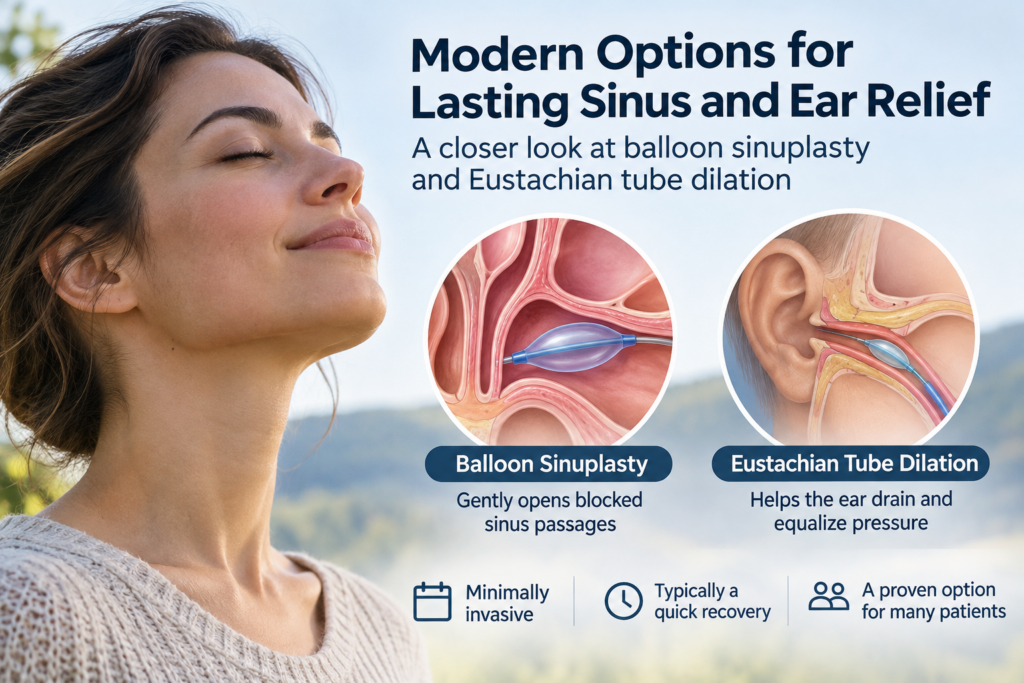
Two important examples are balloon sinuplasty and Eustachian tube balloon dilation.
Balloon Sinuplasty: Improving Sinus Drainage
Chronic sinusitis occurs when inflammation interferes with the normal drainage of the sinuses. Patients may experience facial pressure, congestion, thick nasal drainage, and a reduced sense of smell.
Balloon sinuplasty offers a less invasive treatment option for appropriately selected patients.
During the procedure, an ENT specialist guides a small balloon catheter into a narrowed sinus opening using specialized instruments and a tiny camera called an endoscope. The balloon is briefly inflated to widen the opening, then removed.
Unlike traditional sinus surgery, balloon sinuplasty generally does not require cutting or removing sinus tissue. The goal is to restore natural drainage while preserving normal anatomy.
Many patients can undergo the procedure in an office setting using local anesthesia, with relatively little downtime.
Eustachian Tube Dilation: Relieving Persistent Ear Pressure
The Eustachian tubes connect the middle ears to the back of the nose. They help regulate ear pressure and maintain healthy middle ear function.
When these tubes fail to open properly, patients may experience persistent ear fullness, muffled hearing, popping, or discomfort during altitude changes.
Eustachian tube balloon dilation uses a small balloon inserted through the nose to gently widen the tube’s narrowest portion.
For patients with chronic obstructive Eustachian tube dysfunction, this procedure can improve pressure regulation and reduce troublesome symptoms.
Like balloon sinuplasty, Eustachian tube dilation can often be performed without external incisions, and recovery is generally brief.
Choosing the Right Treatment
These procedures are not appropriate for every patient. A thorough ENT evaluation, sometimes including nasal endoscopy, hearing tests, or sinus CT imaging, helps identify the underlying problem and determine the best treatment.
At Advanced Ear, Nose, Throat & Allergy, we combine modern diagnostic technology with individualized treatment planning. Our goal is to provide effective, evidence-based care while minimizing unnecessary procedures and recovery time.
For patients struggling with persistent sinus or ear pressure symptoms despite medical treatment, today’s minimally invasive options may offer a meaningful path toward lasting improvement.